
Dizziness therapy — less dizziness, more confidence.
Targeted vestibular therapy for better balance and stability. Dizziness and balance problems can change everyday life completely — we help you regain control.
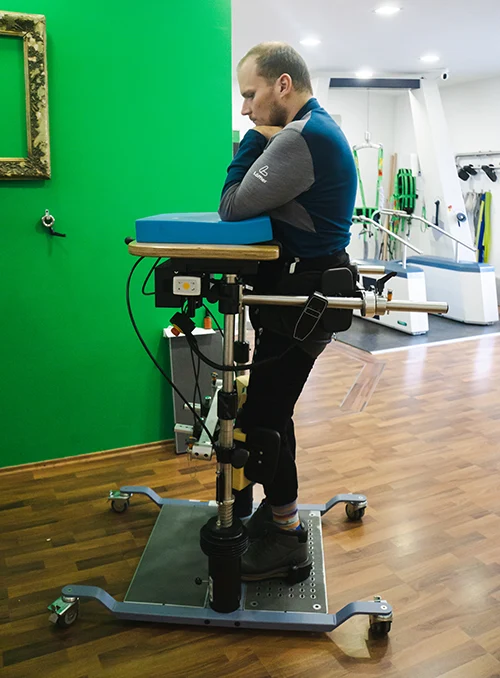
The ground beneath your feet — firm again
Dizziness is more than an unpleasant feeling — it makes you unsure, it limits you and it can lead to social isolation. Our vestibular rehabilitation in Graz and Vienna is designed to retrain the balance system after neurological illness, injury or vestibular disorders.
With focused dizziness and balance exercises we help the brain to reinterpret and compensate for faulty balance signals. Neurological dizziness therapy combines vestibular exercises, walking and balance training.
What changes for you
Dizziness limits more than the body — it creates fear and social isolation. Every improvement here opens doors back into life.
Your dizziness lessens
Focused vestibular training reduces the frequency and the intensity of dizziness for the long term.Your balance improves
You stand more steadily, walk more smoothly and react faster when your balance is disturbed.You walk without fear again
Falls prevention in dizziness gives you back the confidence to move freely.Your quality of life improves
Driving, shopping, stairs — activities that dizziness made impossible become possible again.IVRT®-certified assessment: which form of dizziness do you have?
Not all dizziness is alike — which is why we work to the certified concept of the IVRT® (Institute for Vestibular Rehabilitation Therapy). Our therapist is officially IVRT®-certified and distinguishes between three main forms of dizziness:
Positional vertigo (BPPV)
Typically occurs with certain movements — lying down, turning over in bed, sitting up, or tilting the head forwards and back. The cause is loose crystals in the semicircular canals of the inner ear. With specific repositioning manoeuvres — matched to the canal affected (posterior, lateral or anterior) — they are guided back into place.
Vestibular hypofunction
Here the balance organ works less well — with age, after vestibular neuritis, an acoustic neuroma, or because of ototoxic medication (aminoglycoside antibiotics, for example). In training we build eye-head coordination and balance specifically, so that the organ learns to compensate again.
Vestibular migraine & functional dizziness
For recurring attacks of dizziness caused by vestibular migraine, or for phobic or psychogenic dizziness, focused habituation training helps: the triggering stimuli are trained in controlled repetition until the brain reacts less sensitively to them.
These modern devices and methods are waiting for you
For vestibular rehabilitation we use specialist equipment and evidence-based methods.
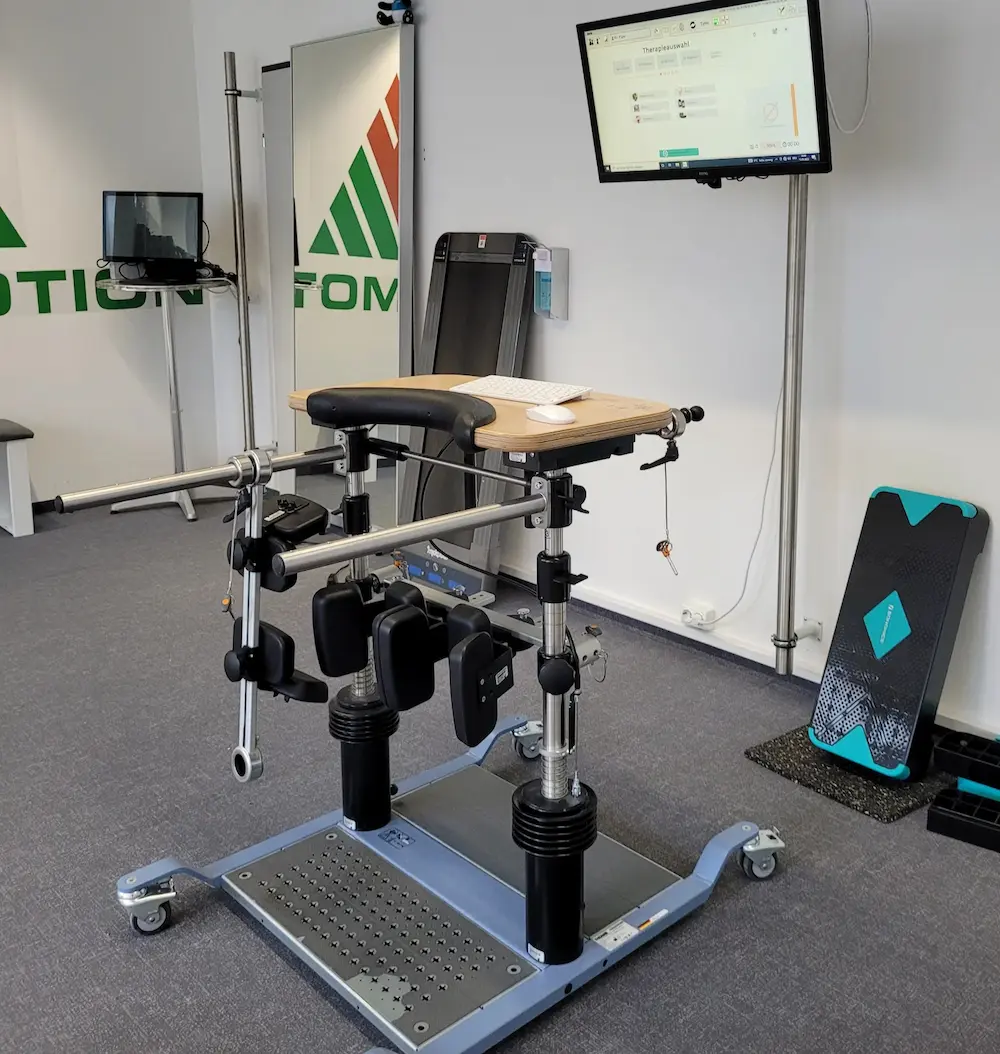
Balo – balance trainer
Dynamic balance training that stimulates the vestibular system specifically and improves the brain’s capacity to compensate — central to dizziness therapy after stroke.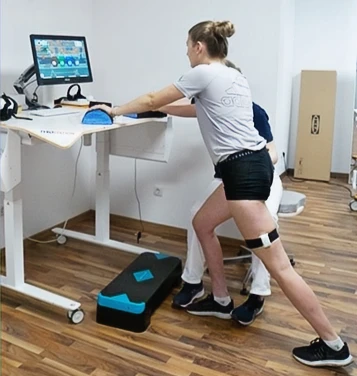
Pablo — focused training for dizziness therapy
Pablo builds balance, coordination and mobility of arm, shoulder and upper body, supports stability in everyday life and helps you feel more confident.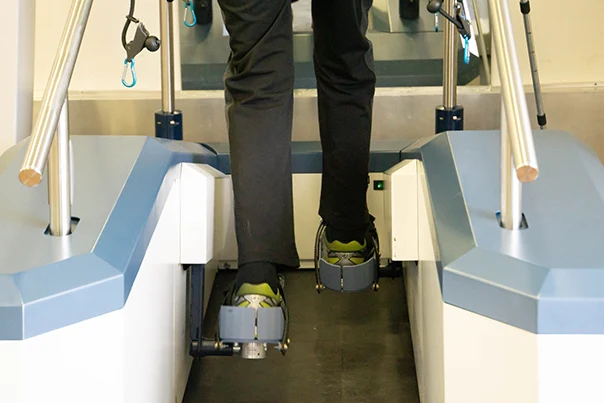
Lyra — balance and safe mobility
Activates muscle memory, improves coordination and reduces the risk of falling.
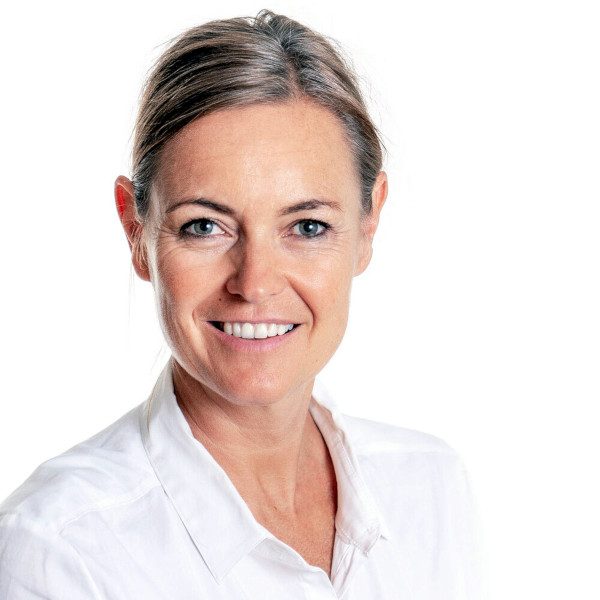
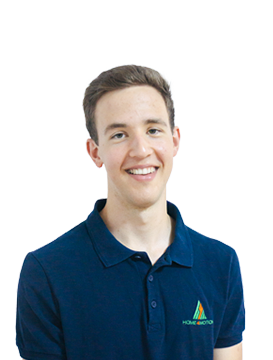
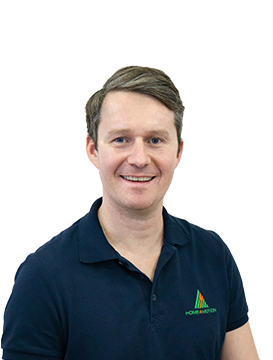
Specialised. Experienced. Here for you.
Vestibular rehabilitation calls for specialist knowledge — not all dizziness is alike. Our team distinguishes between vestibular, neurological and multifactorial causes and chooses the right therapy — in close coordination with your doctor where needed.
Ready to leave the dizziness behind?
Dizziness is often dismissed as “not that bad”. But when it limits what you do every day, it is very bad indeed. We take your dizziness seriously — and we have the means to help.
Does this sound familiar?
Dizziness can have many causes — with us it is always assessed and treated with neurological expertise.
If dizziness follows a stroke or a brain injury — neurological dizziness therapy addresses the central causes and trains the brain to compensate for balance problems.
If you have a vestibular disorder — BPPV, vestibular neuritis or chronic dizziness — focused balance exercises help the brain reprocess the faulty signals.
If dizziness limits your daily life — if you no longer dare go out alone, have given up driving or avoid stairs — it is time for specialist help.
Getting started is simple
Straightforward, personal, no waiting list.
Free initial consultation
Get to know us and our centre — without obligation, in person or by phone. We answer all your questions.
First appointment & assessment
At your first appointment we take our time: video analysis, movement tests and a therapy plan made for you.
Your personal therapy
Regular sessions, adapted to your progress — with a final assessment and video analysis at the end.
Kräftigung des linken Hüftbeugers und Vorfußhebers nach einem Schlaganfall
Herr R. erlitt im Jänner 2020 einen ischämischen Insult der A. media dext., der sich in einer Hemiparese links und einer Tiefensensibilitätsstörung der linken Extremitäten auswirkte. Herr R. beschreibt nach über einem Jahr noch immer Kraftdefizite in der linken oberen und unteren Extremität, vor allem im linken Hüftbeuger und Vorfußheber. Zusätzlich bemerkt er auch immer noch ein vermindertes Gleichgewicht.
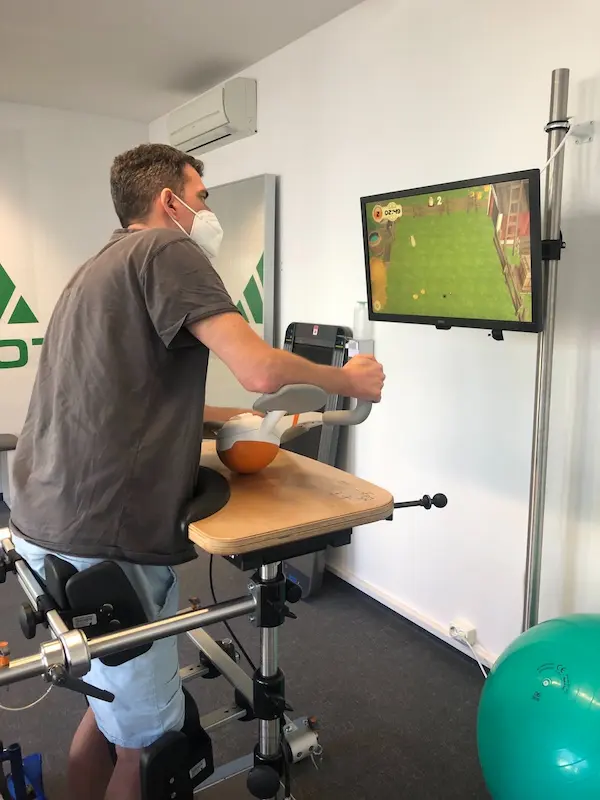
See how we work
Real moments from our therapy sessions — so you know what to expect.
What you want to know
The key answers at a glance — so you arrive well prepared.
What kinds of dizziness do you treat?▾
How many sessions do I need for chronic dizziness?▾
Do I need to see an ENT specialist or neurologist first?▾
Is vestibular rehabilitation worthwhile for older people too?▾
What helps against dizziness and balance problems?▾
Which balance exercises are particularly suitable for older people?▾
How do you get rid of dizziness?▾
Your first step starts here
In a free initial consultation we show you what is possible with your condition — in person, by phone or online.