
Balance & falls prevention — stand safely, live safely
Trust every step again — with targeted balance training and the latest technology.
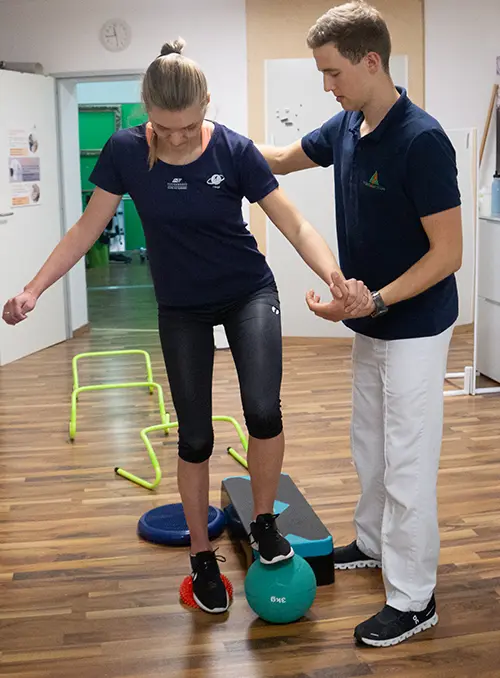
Safety begins with balance
The fear of falling is often worse than the fall itself — it restricts, it creates dependence and it takes away quality of life. Our balance training for neurological conditions in Graz and Vienna starts exactly here: we train stability, reaction and body awareness.
With proven methods and modern equipment such as the Balo and the Zebris gait analysis system we help you regain your balance after stroke, or in Parkinson’s or MS — step by step, at your pace.
What changes for you
Our patients report the following changes after balance training and falls prevention:
You fall less often
Focused falls prevention training demonstrably reduces your risk of falling and gives you back the confidence you need.You stand steadily again
Your balance improves noticeably — standing, turning, bending: everyday movements become safer.You walk without fear
The fear of the next fall eases — you move more freely and more independently again.You stay independent
Fewer falls mean fewer injuries and more independence at home.These modern devices and methods are waiting for you
For neurological balance training we rely on equipment with proven scientific effect.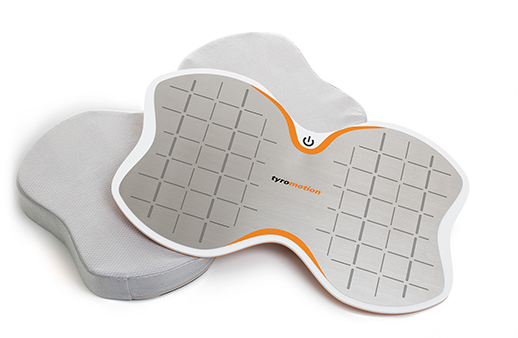
Tymo — balance and stability
Falls prevention through functional balance training — supporting coordination, posture and safe movement for more confidence in everyday life.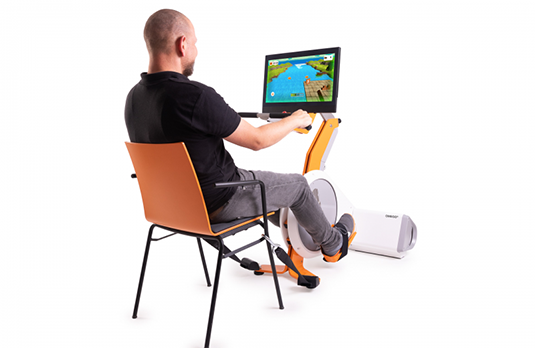
Omego – standing and gait trainer
The Omego combines standing training with dynamic balance tasks — for standing safely and walking more smoothly in everyday life.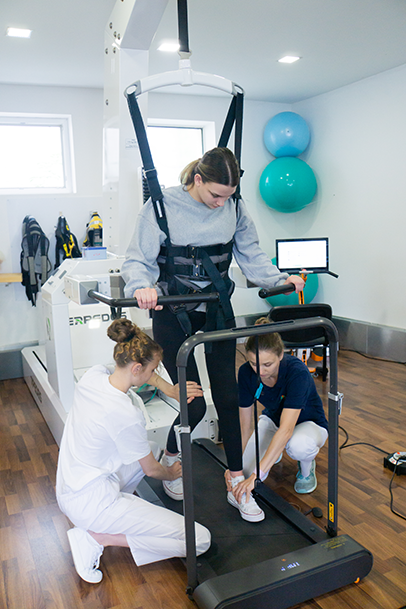
Treadmill
The treadmill makes safe gait training possible, with or without a harness system. Individually adjustable speeds and body-weight support make it easier to learn to walk again. Many movement repetitions build motor control, mobility and stamina. Whether for gait re-education, balance or strengthening — the treadmill is an essential part of our therapy.
Specialised. Experienced. Here for you.
Our team of specialist physiotherapists knows the particular challenge: balance problems in Parkinson’s, MS or after a stroke need more than standard exercises. We combine neurological expertise with modern equipment and a great deal of empathy.
Ready to stand safely again?
Many of our clients came with the feeling “I hardly dare go out any more.” Today they walk on their own again — shopping, strolling, living. That can be possible for you too.
Does this sound familiar?
Balance problems affect people with very different conditions — what they share is the fear of the next fall and the limits it puts on daily life.
If Parkinson’s makes your steps uncertain, if you freeze while walking or lose your balance — our balance training helps improve these symptoms specifically.
If you are afraid of falling after a stroke, have to hold on while walking or trip on level ground — this therapy is for you.
If MS affects your stability — fatigue, numbness or spasticity disturbing your balance — we help you stay safe and independent.
Getting started is simple
Straightforward, personal, no waiting list.
Free initial consultation
Get to know us and our centre — without obligation, in person or by phone. We answer all your questions.
First appointment & assessment
At your first appointment we take our time: video analysis, movement tests and a therapy plan made for you.
Your personal therapy
Regular sessions, adapted to your progress — with a final assessment and video analysis at the end.
Neue Stabilität nach Schädelhirntrauma bei Christoph
Vor 30 Jahren veränderte ein Unfall Christophs Leben. Nach intensiver Therapie bei HOME4MOTION gewann er seine Stabilität zurück.
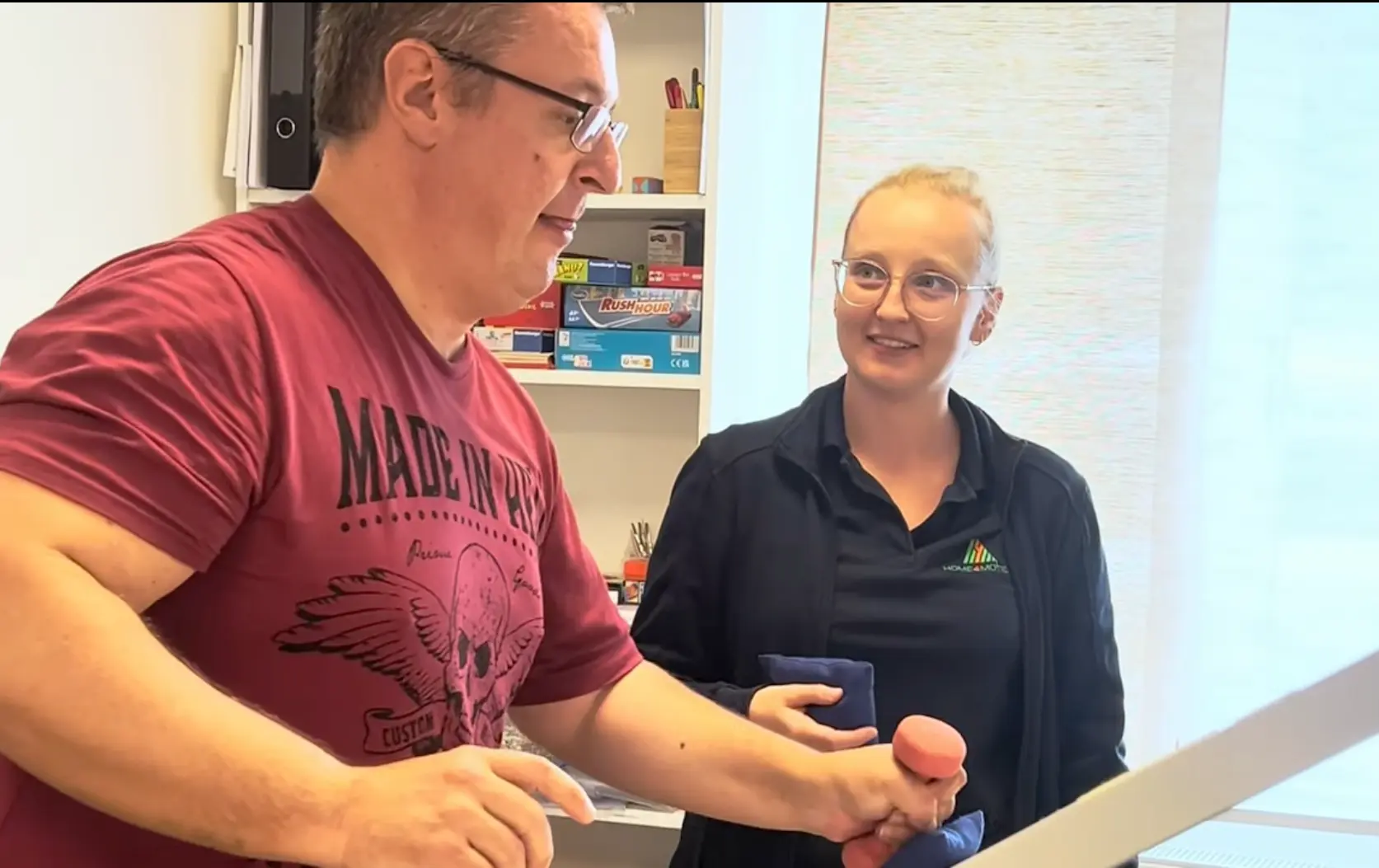
See how we work
Real moments from our therapy sessions — so you know what to expect.
What you want to know
The key answers at a glance — so you arrive well prepared.
Can falls prevention really reduce the risk of falling?▾
Does therapy also help with a strong tremor?▾
How soon after a stroke can I start?▾
How often a week should I train?▾
Your first step starts here
In a free initial consultation we show you what is possible with your condition — in person, by phone or online.