⚡ Service: intensive therapy — high-dose rehabilitation programmes for faster progress See the programmes →
Blog Contact
Information appointment Free and without obligation
Condition · information & therapy

Polyneuropathy therapy in Vienna & Graz — specialist neurological therapy centre

Targeted balance training, gait therapy and falls prevention — with objective measurement before and after therapy.

🔝 Polyneuropathy is one of the most common neurological conditions — an estimated 200,000 people in Austria are affected.

💲Sessions from €80 🛡️Health insurance contribution possible See all prices →
WHAT IS POLYNEUROPATHY?

Understand what is happening

Explained medically

Polyneuropathy is a condition in which many peripheral nerves are damaged at once. The most common causes: diabetic polyneuropathy, alcohol, medication, vitamin deficiency. Depending on the type of nerve affected: sensory polyneuropathy (tingling, numbness), motor polyneuropathy (weakness, foot drop) or autonomic polyneuropathy.

Experienced in everyday life

The feet feel numb — as if walking on cotton wool. Burning and tingling in the feet, especially at night. Falls caused by polyneuropathy become more frequent because the ground can no longer be felt properly. Foot drop makes every step uncertain. Polyneuropathy is often invisible to others, but for those affected it is a constant companion that limits confidence and mobility.

Working together with your consultant

Specialists in the consequences of polyneuropathy — diagnosis stays with your neurologist

Establishing the cause of polyneuropathy and treating it medically is the work of neurologists, often together with physicians or diabetologists. We are your specialists for the functional consequences: unsteady walking, sensory disturbance and the risk of falling. We build therapy on your medical findings and keep adjusting it as the condition changes. The focus is on gait training, balance, falls prevention and — where needed — fine motor skills of the hands.

How does it feel?

What people with this condition experience

Polyneuropathy mainly affects the legs and feet — and so has a direct effect on safety and mobility in everyday life.

Medical
Sensory disturbance in the feet and legs
In everyday life

The feet feel numb — like cotton wool, or as if asleep. Tingling that does not stop. The feel for the ground is lost.

Medical
Neuropathic pain
In everyday life

Burning and stabbing in the feet and legs — worse at night in particular. A pain that ordinary painkillers do not remove.

Medical
Unsteady walking / risk of falling
In everyday life

Balance suffers when the feet cannot feel the ground. Falls become more frequent. The fear of falling restricts what you do.

Medical
Muscle weakness
In everyday life

The feet can no longer be lifted properly (foot drop). Stairs become an effort. Strength in hands and legs declines.

Polyneuropathy does not have to run your day

With focused balance training and gait therapy, many of our clients with polyneuropathy have markedly reduced their risk of falling and gained confidence in everyday life.

First appointment free and without obligation · Mon–Fri 08:00–16:00
How to reach us

Getting started is simple

Straightforward, personal, no waiting list.

1
Free and without obligation

Free initial consultation

Tell us about your difficulties — numbness, fear of falling, unsteady walking. We explain what is possible in polyneuropathy and whether we are the right place for you.

2
Approx. 90 minutes

First appointment & assessment

We measure your balance objectively with the Balo system, analyse your gait and carry out a neurological assessment. From this comes your individual therapy plan.

3
100% individual

Your personal therapy

Regular sessions of focused balance and gait training — matched to your progress. At the end there is a follow-up measurement showing what you have achieved.

From our practice

What our clients say

Real experiences, real progress — how our clients have regained independence, confidence and quality of life despite their diagnosis.

Polyneuropathy

I used to hardly leave the house without fearing the next fall. After the therapy I trust my steps again.

Mr M., 67, Vienna — type 2 diabetic polyneuropathy
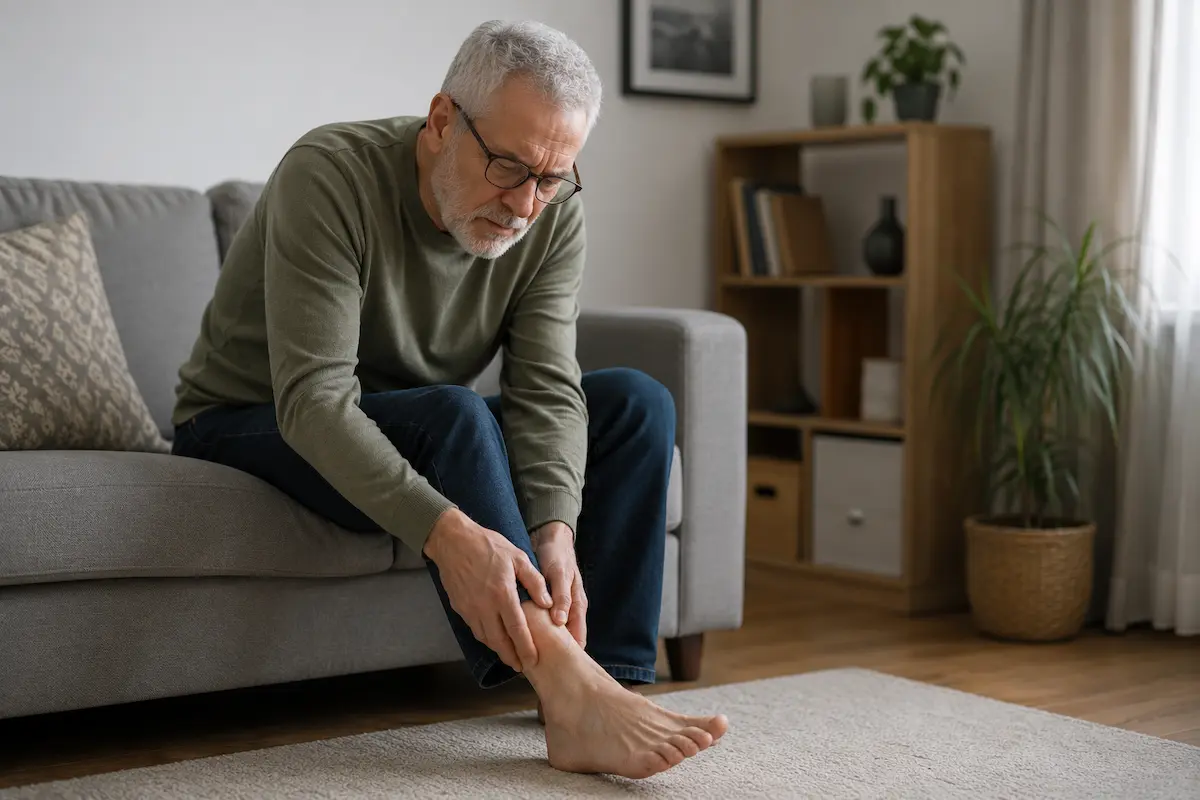
A person with polyneuropathy at home, coping with sensory disturbance and unsteady walking, supported by HOME4MOTION.

From our practice. Stories, knowledge and insights from everyday therapy

Read the stories of our clients — people with very different diagnoses who began therapy at HOME4MOTION and achieved noticeable progress in their daily lives.

Read the whole story →
Frequently asked questions

Polyneuropathy: common questions about treatment and therapy options

Answers to the most common questions about your condition and therapy — explained clearly and gathered in one place. So you can read at your own pace and come to your appointment well prepared and at ease.

Can physiotherapy cure polyneuropathy?▾
No — physiotherapy cannot undo the underlying nerve damage. What it demonstrably can do: improve balance, markedly reduce the risk of falling and restore confidence in movement in everyday life. After focused training many of our clients report more independence and more confidence — even though the numbness and tingling remain.
Which therapies help in polyneuropathy specifically?▾
Depending on your symptoms we use balance training on the Balo Zebris measuring system, gait therapy for foot drop and occupational therapy for everyday skills. Where needed we also advise on aids such as foot-drop orthoses. The exact programme is matched to your situation — in the free initial consultation we work out together what makes sense for you.
I have diabetic polyneuropathy — am I in the right place at HOME4MOTION?▾
Yes. Diabetic polyneuropathy is one of the most common causes of balance problems and falls — and one of the diagnoses we work with regularly. The principle of therapy is the same as in other forms: we train precisely what the nerve damage has affected, above all deep sensation, balance and gait.
Is polyneuropathy curable?▾
That depends on the cause. If the underlying condition — diabetes or alcohol, for example — is treated consistently, the polyneuropathy can partly recede. Focused rehabilitation always helps ease the symptoms and reduce the risk of falling and loss of function.
How serious is the risk of falling in polyneuropathy really?▾
Falls are a serious complication in polyneuropathy. Because the damaged nerves send the brain almost no feedback from the feet, normal balance regulation is missing — especially on uneven ground, in the dark or on stairs. Focused balance training can reduce that risk measurably. In our practice we measure your balance objectively before and after therapy, with the computer-assisted Balo Zebris system.
Do I need a referral to make an appointment?▾
No. You can contact us directly, without a referral. The first step is a free initial consultation in which we discuss your situation and explain what we can do for you. Only then do you decide whether to begin therapy. You can reach us on +43 (0) 507 400, Mon–Fri 08:00–16:00.
Can exercise therapy help in polyneuropathy?▾
Yes — regular, well-adapted exercise therapy demonstrably improves coordination, strength and balance. Our team at HOME4MOTION develops an individual exercise programme matched safely and effectively to your polyneuropathy symptoms.
Is physiotherapy for polyneuropathy covered by health insurance?▾
That depends on your insurance and on the prescription. As a rule a doctor’s prescription is a condition for insurance cover. We work both with insurance prescriptions and privately — a full overview of prices and billing is on our prices page, or just ask us at the initial consultation.
Is HOME4MOTION only in Graz, or in Vienna too?▾
We are there for you at both centres — in Graz (Steinfeldgasse 63a) and in Vienna (Altmannsdorferstrasse 89, 1120 Vienna). The therapy on offer for polyneuropathy is identical at both. You can reach us on one number: +43 (0) 507 400.
What is polyneuropathy?▾
Polyneuropathy is a condition in which several peripheral nerves are damaged at once. Typical symptoms are numbness, tingling, burning and weakness in hands and feet. Common causes are diabetes, alcohol, medication or a genetic predisposition.
Which therapies help in polyneuropathy?▾
Treatment includes physiotherapy (coordination, balance, strength), occupational therapy (everyday skills, fine motor control) and, where needed, pain management. HOME4MOTION offers specialist therapy for polyneuropathy in Graz and Vienna, matched to your situation.
What everyday problems does polyneuropathy cause?▾
People often have difficulty walking, keeping their balance and with fine motor tasks. The risk of falling is increased. Occupational therapy and physiotherapy at HOME4MOTION help preserve everyday skills and reduce that risk.
How does polyneuropathy differ from other neurological conditions?▾
Unlike central conditions such as stroke or MS, polyneuropathy affects the peripheral nerves outside the brain and spinal cord. Rehabilitation focuses on compensating for the disturbed nerve function and on preventing falls.
What symptoms does polyneuropathy cause in the feet and legs?▾
Typical symptoms are numbness, tingling, pain or a changed sense of touch, usually starting in the feet and spreading upwards. Focused therapy can ease these symptoms and influence the course positively.
Who treats polyneuropathy?▾
Diagnosis and treatment are interdisciplinary: neurologists, supported by specialist physiotherapists and equipment-based methods in neurological rehabilitation.
What can be done about polyneuropathy?▾
Alongside medical treatment of the underlying condition, physiotherapy, focused training and equipment-based methods such as high-tone therapy help reduce symptoms such as numbness and pain.

Your first step starts here

In a free initial consultation we show you what is possible with your condition — in person, by phone or online.

First appointment free and without obligation · Mon–Fri 08:00–16:00