
Speech therapy in dysarthria — speak clearly again
When the muscles of speech no longer work as they did — we train articulation, pace and vocal strength back.
When the voice no longer carries
Dysarthria after stroke or in Parkinson’s is a neurological speech disorder — the muscles for speaking, breathing and voicing are affected. Speech sounds unclear, slurred, too quiet or monotone. Language and thought are entirely intact — only the way out is harder.
Our neurological speech therapy in Graz trains articulation, pace of speech, breath support and vocal strength — with proven methods such as Lee Silverman Voice Treatment (LSVT), developed specifically for people with Parkinson’s. Outpatient dysarthria therapy that really is heard.
What changes for you
Being able to speak more clearly changes everything — how people perceive you, how you feel and how independently you can take part in life.
You are understood again
Articulation training in dysarthria improves the clarity of your speech — conversations become possible again without constant repeating.Your voice becomes stronger
Voice strengthening in Parkinson’s (LSVT LOUD) demonstrably increases loudness — you are heard again without straining.Your pace of speech becomes normal
Speaking too quickly or too slowly is regulated through focused rhythm training — clearer and easier to listen to.You communicate with confidence again
People who speak clearly are taken seriously — speech therapy gives you back confidence in communication.These modern devices and methods are waiting for you
For neurological dysarthria therapy we use the methods with the strongest evidence.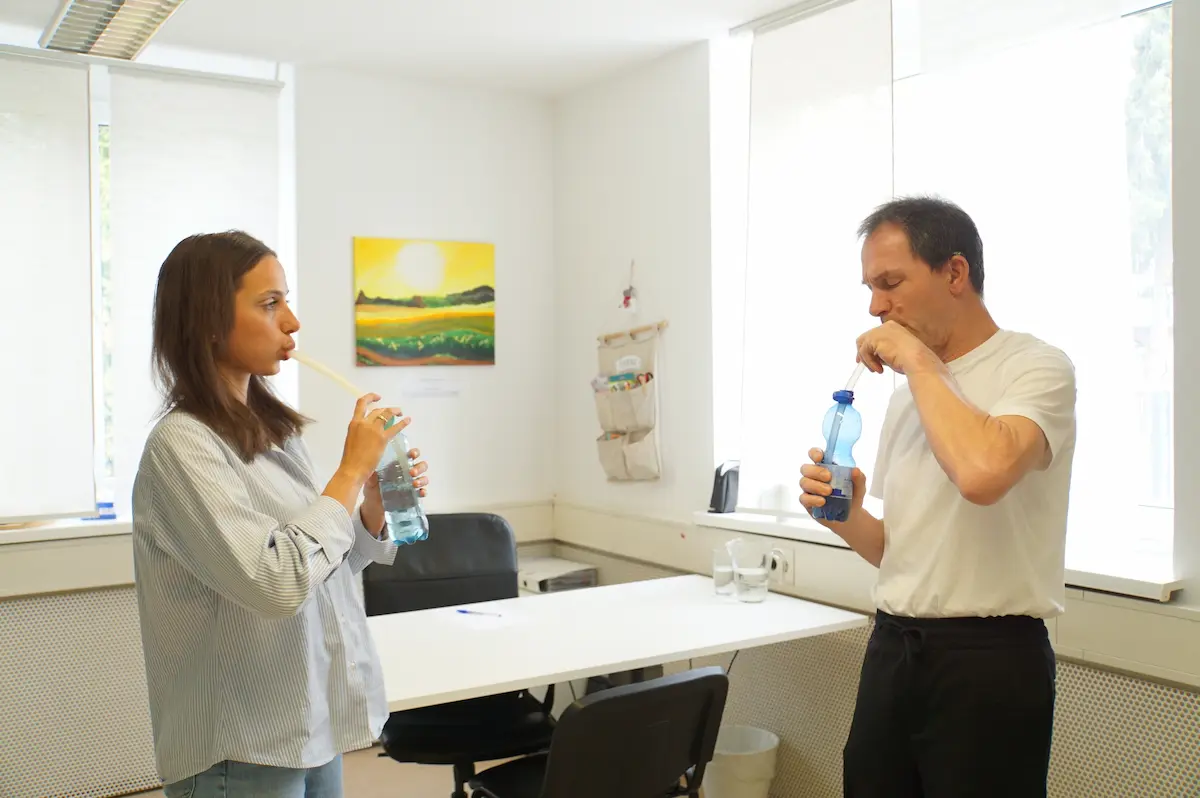
Breath support & speech rhythm training
The right breathing technique is the basis of strong speech — we train breath capacity, control of the out-breath and speech rhythm systematically.
Voice training
A method of voice therapy in Parkinson’s — four intensive weeks, measurably effective and recognised internationally.
Articulation training & orofacial therapy
Targeted exercises for lips, tongue, jaw and palate improve clarity and intelligibility in all forms of dysarthria.

Specialised. Experienced. Here for you.
Our specialist speech and language team is trained in evidence-based methods of dysarthria therapy. We know that unclear speech is frustrating — and we work with you, with real commitment, on your vocal strength and intelligibility.
A specialised method of voice therapy — the best-evidenced therapy in Parkinson’s: intensive, measurably effective and recognised internationally.
Ready to be heard again?
Unclear speech often leads to withdrawal, loneliness and frustration. It does not have to stay that way. With focused speech therapy and proven methods we help you regain your voice.
Does this sound familiar?
Dysarthria shows itself differently — from mild indistinctness to severely limited speech. We treat all levels of severity.
If Parkinson’s has made your voice quieter, more monotone and harder to understand — speech therapy with LSVT LOUD is the method with the strongest evidence and often shows rapid improvement.
If after a stroke your speech is slurred, slow or unclear — dysarthria therapy trains the affected speech muscles specifically.
If family and friends ask you to speak louder or more clearly, if phone calls have become difficult or you avoid social situations — now is the right moment.
Getting started is simple
Straightforward, personal, no waiting list.
Free initial consultation
Get to know us and our centre — without obligation, in person or by phone. We answer all your questions.
First appointment & assessment
At your first appointment we take our time: video analysis, movement tests and a therapy plan made for you.
Your personal therapy
Regular sessions, adapted to your progress — with a final assessment and video analysis at the end.
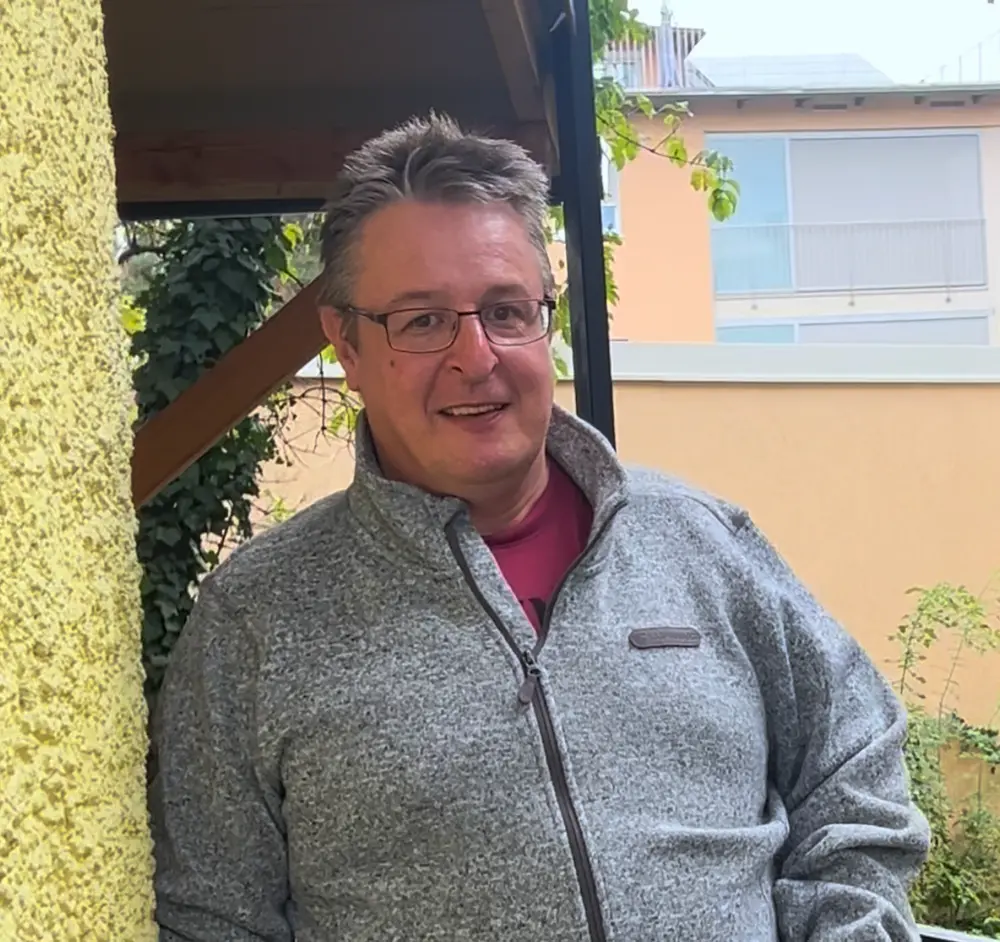
Vor 30 Jahren stellte ein Autounfall Christophs Leben auf den Kopf.
Vier Wochen lag der gebürtige Wiener im Koma, weitere drei Wochen im Tiefschlaf. Danach musste er alles neu lernen: schlucken, sprechen, stehen, gehen. Nachdem er nach dem Unfall Schlucken und Sprechen neu erlernen musste, arbeitete er hier weiter an der Stabilisierung seiner Sprech- und Schluckfunktionen. Das gab ihm zusätzliche Sicherheit im Alltag.
See how we work
Real moments from our therapy sessions — so you know what to expect.
What you want to know
The key answers at a glance — so you arrive well prepared.
What is dysarthria and how does it show itself?▾
Can speech therapy really improve intelligibility?▾
Does speech therapy also help with a very quiet voice (hypophonia) in Parkinson’s?▾
How often should I come for speech therapy?▾
Your first step starts here
In a free initial consultation we show you what is possible with your condition — in person, by phone or online.